
Bringing the Outdoors In
A Guide to Biophilic Design
In a world where we spend approximately 90% of our time indoors, it’s no wonder we often feel drained, restless, or disconnected. We crave sunlight, fresh air, and the sight of greenery. This isn’t just a preference, it’s a biological need.
Enter Biophilic Design.
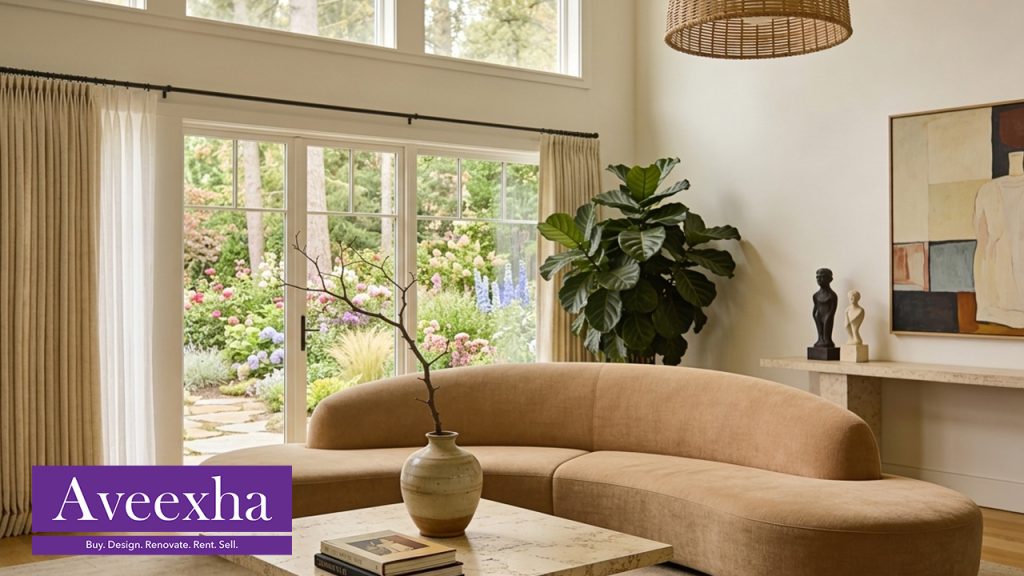
Derived from the Greek word philia (love of life), biophilic design is more than just interior decorating. It is a scientific approach to architecture and design that seeks to reconnect humans with nature. It’s about creating spaces that don’t just look good, but actually make us feel better, reducing stress, improving cognitive function, and enhancing overall well-being.
The best part? You don’t need to live in a glass house in the forest to achieve it. Here is how to weave the principles of biophilic design into your home, no matter your budget or square footage.
1. Layer Your Lighting
The harshest enemy of biophilic design is the single, overhead “big light.” In nature, light is dynamic. It changes color from the golden warmth of dawn to the cool blue of midday to the soft flicker of dusk.
To mimic this:
- Maximize Natural Light: Remove heavy drapes. Use sheer curtains or mirrors to bounce light deeper into a room.
- Layer Your Sources: Use a combination of ambient, task and accent lighting.
- Mimic Circadian Rhythms: Invest in smart bulbs that shift from cool white (simulating daylight) during the workday to warm amber (simulating firelight) in the evening.
2. The Power of Real Greenery (and the “Killable” Zone)
Yes, houseplants are the most obvious way to connect with nature, but the key is intention. A single, thriving plant in a beautiful pot has more impact than a dozen sad, wilting ones.
- Go Big: Instead of five small pots scattered about, try one large statement tree like a Fiddle Leaf Fig, Bird of Paradise or a mature Monstera.
- Texture Variety: Mix leaf shapes and textures. Pair the broad leaves of a Philodendron with the fine, wispy fronds of an Asparagus Fern.
- Don’t Have a Green Thumb? High-quality preserved moss art or realistic botanical prints can still provide the visual connection to nature without the maintenance.
3. Embrace Organic Shapes and Patterns
Nature abhors a straight line. Look outside, branches curve, rivers meander, stones are rounded. Our brains are wired to recognize and relax when we see these organic shapes.
- Furniture: Choose a round dining table, an arched mirror, or a curved sofa over boxy, angular pieces.
- Patterns: Introduce textiles that feature botanical prints, wavy lines or organic textures. Think less geometric chevron and more flowing, painterly florals.
4. The Sensory Experience (Sound, Smell, Touch)
Biophilic design engages all five senses. A space may look natural, but if it sounds like an office and feels like a plastic waiting room, the connection is lost.
- Sight: Position furniture to maximize views of windows or nature-inspired art. Incorporate natural patterns, wood grain, stone veining, organic shapes, that give the eye a sense of calm.
- Sound: Incorporate the sound of water. A small tabletop fountain can mask city noise and create a sense of tranquility. Alternatively, consider a wind chime in a breezy hallway or simply opening the window to let in the sounds of birds.
- Smell: Avoid synthetic plug-in air fresheners. Opt for the natural scent of beeswax candles, eucalyptus in the shower or aromatic herbs like rosemary and lavender.
- Touch: Layer natural textures. Mix chunky knit wool, smooth linen, raw jute and soft velvet. The variation in tactile sensation mimics the diversity of the forest floor.
- Taste: Plant a small herb garden on a kitchen windowsill. The act of snipping fresh basil or mint for a drink or meal creates a literal connection between your home and the natural world. Serve food on stoneware or wood to engage taste through material authenticity.
5. Use Natural Materials and Honest Textures
One of the core tenets of biophilic design is using materials that do not hide their origins. We want to see the grain of the wood, the fissures in the stone, and the variation in the clay.
- Wood: Use it where possible, but aim for raw or lightly finished wood rather than high-gloss, uniform pieces. Reclaimed wood adds a sense of history and weathering.
- Stone: Introduce marble, slate, or travertine. Even in small doses, like a stone coaster or a soapstone countertop, it grounds the space.
- Natural Fibers: Swap synthetic curtains for linen or cotton. Use wool or sisal rugs instead of polyester blends.
6. Create “Prospect” and “Refuge”
This is a critical psychological aspect of biophilic design. In the wild, humans seek out positions of prospect (the ability to see far distances to survey danger) and refuge (a safe, sheltered spot to hide from threat).
- Prospect: Arrange your furniture to maximize views. If you have a window, position your desk or main seating area to face it. If you lack a view, hang landscape art that depicts a deep horizon line (mountains, ocean) to trick the eye.
- Refuge: Create a cozy nook. This is a corner with a low-hanging pendant light, a comfortable armchair with high sides, and a soft throw. It’s a spot that feels like a cave, safe, enclosed and private.
7. The Visual Connection to the Outside
Sometimes, bringing nature in is impossible (hello, windowless bathrooms). In that case, you must strengthen the visual connection to the outside.
- Frame the View: Trim back bushes blocking your windows. Treat the window as a piece of art.
- Nature Art: If the view is a brick wall, hang large-scale photography of landscapes or botanical illustrations. Studies show that even looking at images of nature can lower cortisol levels.
Starting Small
You don’t have to renovate your entire home to benefit from biophilic design. Start with one corner.
- Swap a synthetic throw pillow for a wool or linen one.
- Add one large plant next to your desk.
- Change your light bulb to a warmer temperature.
- Open the window for 10 minutes to let in fresh air and natural sounds.
Biophilic design isn’t a trend, it’s a return to what makes us human. By re-introducing the elements of nature into our homes, we transform our houses from mere shelters into restorative sanctuaries.
Are you ready to let your home breathe?